
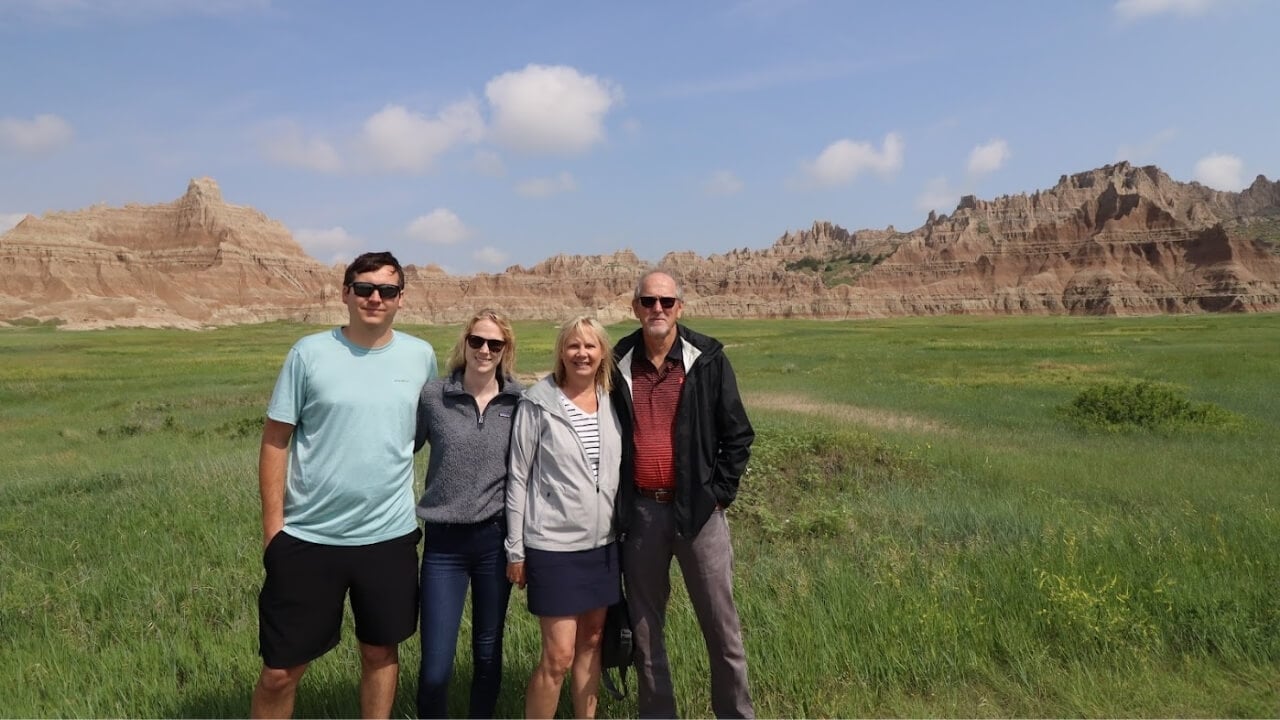
Two things decide what you should wear in Badlands National Park, and neither is the season. There is no shade anywhere, not on the overlooks, not on the trails, not in the parking lots, and the wind is close to constant. Closed shoes, sun cover and a windproof layer will serve you better in any month than clothing picked purely off the forecast. If you are driving out from Rapid City, our guide to the drive covers the entrances and the gravel road.
Wear this in any season
- Closed, grippy shoes. Badlands rock is soft, crumbly and dusty, and behaves like gravel on a slope. Sneakers are fine, but sandals are not.
- A brimmed hat and sunglasses. There is nowhere to step out of the sun.
- A wind layer. Even in summer the overlooks are exposed and the wind rarely stops.
- More water than feels reasonable. Dry air plus wind means you dehydrate without noticing you are sweating.
The warning nobody gives you: gumbo
Wet Badlands clay is a real hazard, and not a mild one. It goes slick and heavy, it sticks to everything, and it builds up on boots in pale clumps that add real weight and remove all grip. Locals call it gumbo. It is a problem for vehicles and a serious problem for anyone on foot.
The part people get wrong is how long it lasts. It can stay that way for anything from a few hours to several days, depending on how much rain fell and how much sun and heat follow. A trail that was fine on Monday morning can still be treacherous on Wednesday if the weather has been gray.
If rain is in the forecast or has fallen recently, bring footwear you do not mind ruining, and treat every slope as off-limits until it has properly dried out.
Summer
It is hot, bright and completely unshaded. The rock radiates heat back at you, so it feels warmer on the formations than the air temperature suggests.
- Light, loose, long sleeves beat a tank top. Covering skin works better than sunscreen alone.
- Brimmed hat rather than a cap, because the back of the neck is where people burn.
- Bring a warm layer anyway if you are staying for sunset or the night sky. The temperature drops sharply once the sun goes.
Afternoon thunderstorms build fast here. If you hear thunder, get off the exposed formations, because they are the highest thing around.
Spring and fall
These are the best months to visit, and the ones that catch people out. The swing between a cold morning and a warm afternoon can be large, and the wind has more bite.
- Layers you can shed and carry, because you will use all of them in a day.
- A proper windproof shell, not just a fleece.
- Spring is the wettest season, so the gumbo warning applies here most of all.
Winter, and yes, we run tours
The park stays open and winter is the quietest, cleanest-looking time of year. Snow on banded rock is worth seeing, and we run tours right through it. It is also serious cold, made worse by open, unbroken wind.
What we tell guests to bring:
- A warm jacket and layers underneath it.
- Gloves, a scarf and a hat. Wind chill on the overlooks is the real problem, not the temperature reading.
- Long underwear, highly recommended. This is the one people skip and then regret. A base layer changes the entire day.
- Insulated, waterproof boots with grip.
If you are staying for the night sky
Badlands is a certified International Dark Sky Park, and standing still in the dark for an hour is a completely different clothing problem from walking around in daylight.
- Dress one full layer warmer than the evening feels when you set out. You will not be moving.
- A red-light flashlight rather than white, because it protects your night vision and everyone else’s.
- Something to sit or lie on. The ground gets cold fast.
What you can leave behind
- Hiking poles, unless you already use them. The trails are short and mostly flat.
- Serious mountaineering boots. They are overkill for boardwalks and short trails.
- An umbrella. The wind will destroy it.
What we bring, so you do not have to
If you are booked on a tour with us, most of the worry this page is about stops being yours. Every trip carries:
- Water and snacks
- Binoculars, which are the single biggest factor in whether you spot bighorn sheep
- Blankets, and hand warmers in the colder months
- Zero-gravity chairs for night-sky viewing, so you lie back instead of craning your neck
- Red-light flashlights, a stargazing and constellation app, and learning material
- Laser pointers for picking out constellations against the sky
- Bug spray, rarely needed here, but carried anyway
- Help photographing the night sky on your own phone. Most people do not know their phone can do it at all
You are in a vehicle between stops, so you are not carrying everything all day, and there is somewhere warm to retreat to. Because every departure is private to your group, the pace bends to the weather rather than the other way round.
The Sunset and Golden Hour Tour, the Wildlife Tour and the Stargazing Tour all run under the Dark Sky Park. Call 605-252-9100 if you want to know what the conditions have been doing this week.